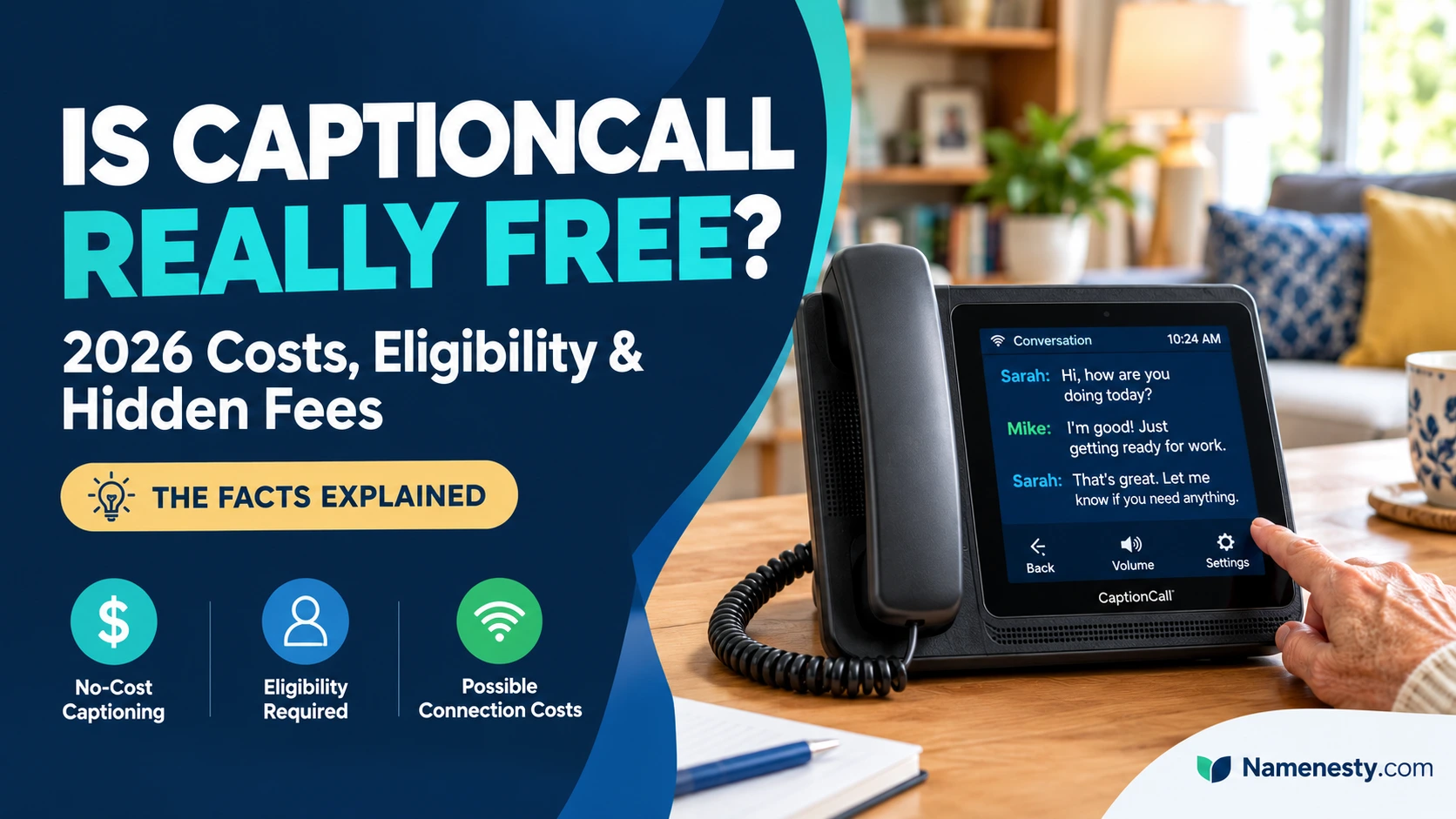
Is CaptionCall Really Free? Costs, Eligibility & Hidden Fees Explained (2026)
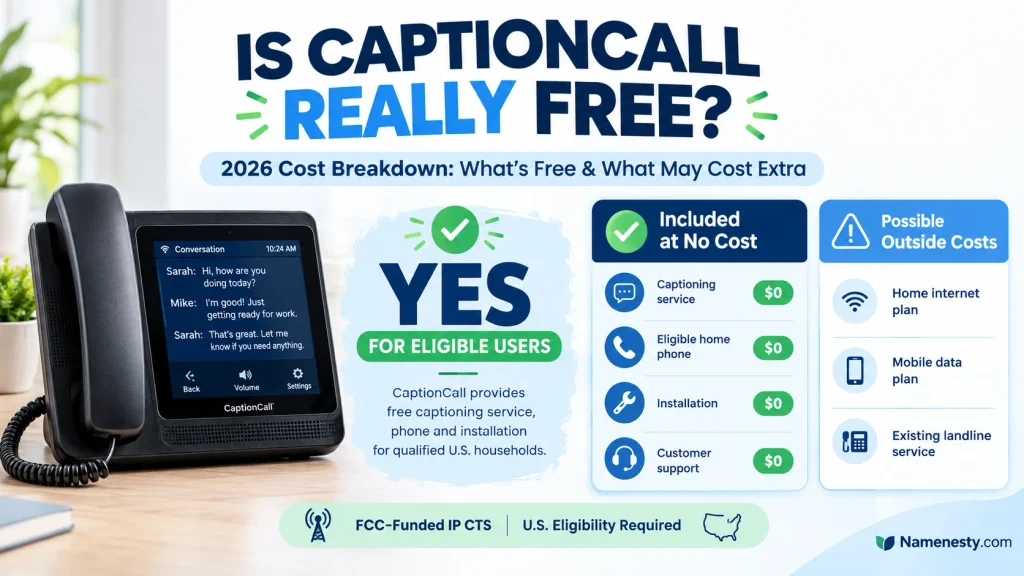
A free phone, real-time captions, and no monthly captioning fees? It sounds almost too good to be true. So, is CaptionCall really free, or is there a hidden catch? The answer is yes, but only for eligible U.S. users whose hearing loss makes phone captions necessary. CaptionCall’s federally funded service covers captioning and eligible equipment, while internet or phone plan costs may still apply. Before signing up, it’s worth understanding who qualifies, how the program works, and what you might actually pay. This guide breaks down the facts so you can decide whether CaptionCall is right for you.
A company offering telephone, real-time captions, installation, and ongoing support without charging you anything might sound too good to be true. That is why so many people ask: Is CaptionCall really free, or is there a catch?
The short answer is yes. CaptionCall is a legitimate, federally funded captioned telephone service available at no cost to eligible people in the United States whose hearing loss makes telephone captions necessary.
But there are important details behind that promise. Not everyone qualifies, some ordinary connection expenses may still apply, and the equipment is not necessarily yours to keep.
This guide explains how CaptionCall works, who qualifies, what is included, how to apply, and what to consider before choosing a captioned telephone service.
CaptionCall at a glance
| Captioning service | Free for eligible users |
| Home phone equipment | Provided at no cost to qualified users |
| Monthly CaptionCall fee | $0 |
| Installation and support | Included at no cost |
| Eligibility | Hearing loss requiring telephone captions |
| Availability | United States |
| Internet or telephone plan | Separate costs may apply |
1. Is CaptionCall Really Free? The Truth Explained
Yes, CaptionCall is free for eligible U.S. residents whose hearing loss makes captions necessary for telephone conversations. There is no CaptionCall subscription fee, and qualified users do not pay for the federally funded captioning service.
sorenson.com
+1
The key distinction is that CaptionCall is free to the qualifying user, not free to operate. The service has real operating costs, but those costs are covered through a federal telecommunications accessibility program.
What does free actually mean?
CaptionCall’s no-cost service is designed to remove financial barriers that could prevent people with hearing loss from communicating effectively by telephone.
For example, imagine an older adult who can hear someone speaking but struggles to distinguish individual words during phone calls. A captioned telephone allows that person to listen to the conversation while reading the caller’s words on a screen.
Instead of paying a captioning subscription every month, the eligible user receives the service through federal funding.
CaptionCall cost breakdown
| Service or feature | Cost to eligible user |
| CaptionCall captioning | $0 |
| CaptionCall home phone | $0 |
| CaptionCall Mobile app | $0 |
| CaptionCall subscription | $0 |
| CaptionCall installation | $0 |
| CaptionCall support | $0 |
| Existing internet subscription | Depends on provider |
| Existing cellular service | Depends on plan |
| Existing landline service | Depends on provider |
This distinction matters because some users mistakenly assume that CaptionCall also pays their household internet or telephone bills.
It does not generally cover those unrelated services.
Key takeaway: CaptionCall does not charge eligible users for its captioning service, but ordinary third-party communication expenses can still exist.
2. Why Is CaptionCall Free? How FCC Funding Works
CaptionCall operates through the Federal Communications Commission’s Internet Protocol Captioned Telephone Service program, commonly abbreviated IP CTS.
The program helps people with hearing loss communicate over the telephone by providing captions of the other person’s speech.
How does CaptionCall receive funding?
The process is relatively straightforward:
- Telecommunications companies contribute to the federal Telecommunications Relay Services Fund.
- Eligible users register for a qualified captioned telephone service.
- The user makes or receives telephone calls with captions.
- The service provider supplies the captioning.
- The federal fund reimburses the provider under applicable compensation rules.
The FCC’s 2026 regulatory materials continue to describe compensation arrangements for IP CTS providers, confirming that captioning is supported through the federal TRS funding system.
FCC Docs
+1
Is CaptionCall funded by taxpayers?
CaptionCall is supported by a federally administered fund financed through telecommunications industry contributions. It is not ordinarily financed through direct monthly payments from individual CaptionCall users.
The program exists to improve accessibility and support functionally equivalent telephone communication for people with hearing loss.
Why does the government support captioned telephone services?
Telephone communication is essential for everyday activities, including scheduling medical appointments, contacting family, managing finances, communicating with businesses, and responding to emergencies.
Without accessible telephone services, people with significant hearing difficulties may face communication barriers.
The federal relay service framework helps reduce those barriers.
Important: Federal funding does not mean anyone can register merely to receive a free telephone. Eligibility is tied to a genuine need for captioned calling.
3. What Does CaptionCall Include for Free?
CaptionCall’s no-cost offering extends beyond displaying text during telephone calls. Depending on the service and setup, eligible users can receive a dedicated captioned telephone, assistance with installation, and ongoing support.
4Templates
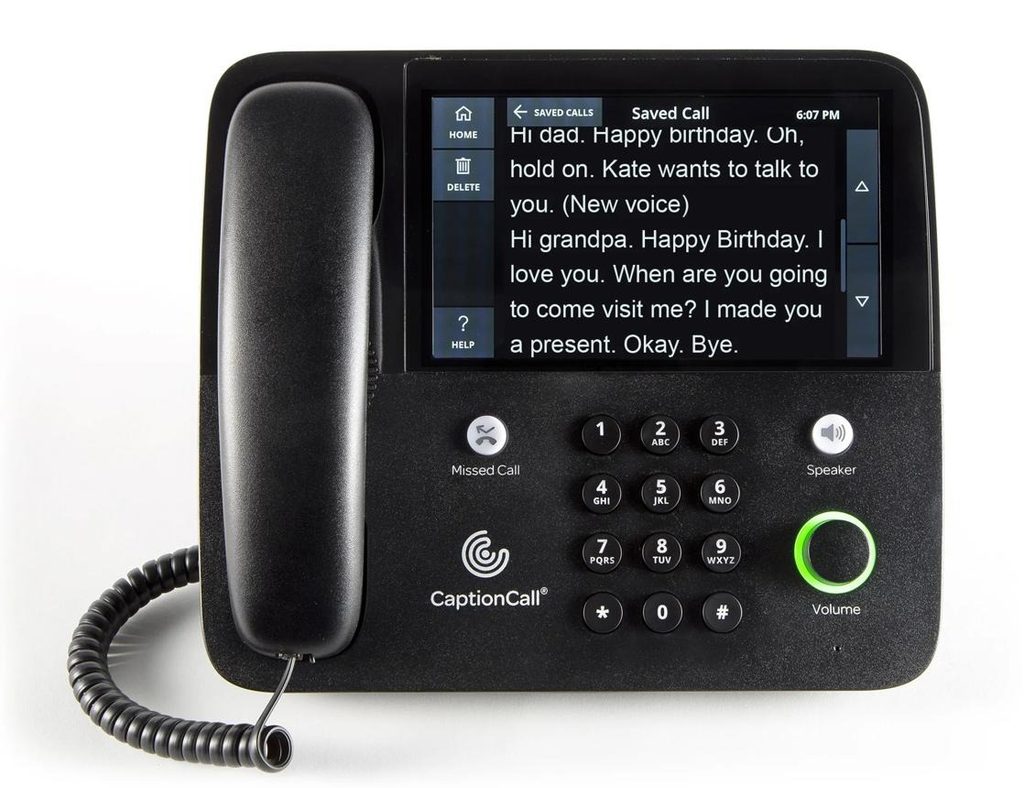
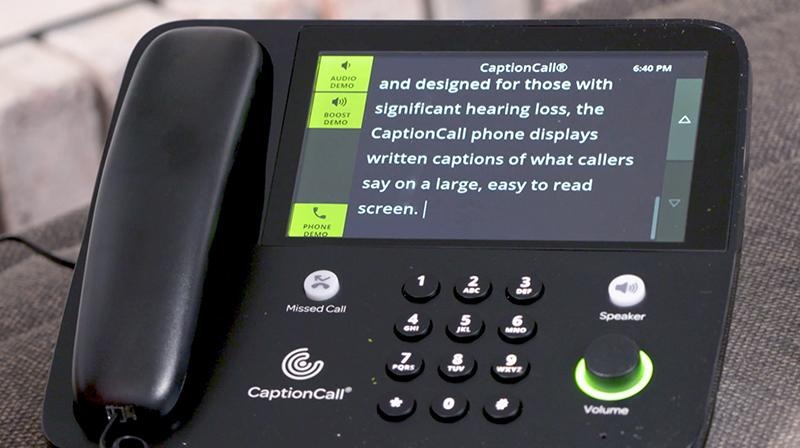
CaptionCall home phone
The home phone is designed for people who prefer a dedicated telephone rather than relying entirely on a smartphone.
Its accessibility-oriented features include a screen for reading captions and controls designed to make telephone conversations easier to follow.
Real-time telephone captions
The captioning system converts the other caller’s speech into readable text.
Users can listen to the audio and read captions at the same time. This is especially useful when someone speaks quickly, has an unfamiliar accent, or mentions information that must be remembered accurately.
Installation and training
CaptionCall offers setup assistance, including guided installation and user training. This can be especially helpful for people who are unfamiliar with touchscreen telephones.
Customer support
Users can contact CaptionCall for help with technical difficulties, setup questions, and service-related issues.
Sorenson’s official support page provides dedicated CaptionCall assistance and contact information.
sorenson.com
Does the user own the phone?
This is an important detail.
Sorenson states that CaptionCall equipment remains its property to support ongoing service, maintenance, and upgrades. Receiving a phone at no cost should therefore not be confused with purchasing and owning the device outright.
Language Services and ASL Interpreting
Before registering, users should review the current equipment terms, including what happens if service is discontinued.
4. Are There Any Hidden Fees or Monthly Charges for CaptionCall?
CaptionCall does not charge eligible users a monthly fee for the federally funded captioning service. However, calling it free without explaining related expenses could mislead readers.
The clearest way to understand the costs is to separate CaptionCall’s charges from charges imposed by unrelated providers.
CaptionCall fees versus connection expenses
| Expense | Is it a CaptionCall charge? | What to know |
| Captioning minutes | No | Covered through federal funding |
| CaptionCall subscription | No | No monthly captioning subscription |
| Home phone equipment | No | Provided under service terms |
| Home internet | No | ISP charges may apply |
| Mobile data | No | Cellular plan charges may apply |
| Landline service | No | Telephone provider may charge |
| Optional third-party equipment | No | Depends on personal setup |
Example: A user with existing internet
Suppose someone already pays $60 per month for household internet.
They register for CaptionCall and receive an eligible no-cost captioning service.
Their CaptionCall captioning fee is $0, but they still pay the existing $60 internet bill.
That does not make CaptionCall a paid subscription. It simply means the household continues paying for a separate service.
Example: Someone using CaptionCall Mobile
A person already owns an Android phone with a mobile data plan.
After qualifying and registering, they use CaptionCall Mobile without paying a separate captioning subscription.
Their existing cellular plan may still cost money, and data use may be subject to the carrier’s terms.
Questions to ask before registration
Ask whether your current internet or telephone setup is compatible, whether additional equipment is needed, whether your existing phone number can be used, and what happens to the equipment if you stop using CaptionCall.
These practical questions provide a more useful picture than simply asking whether the service is free.
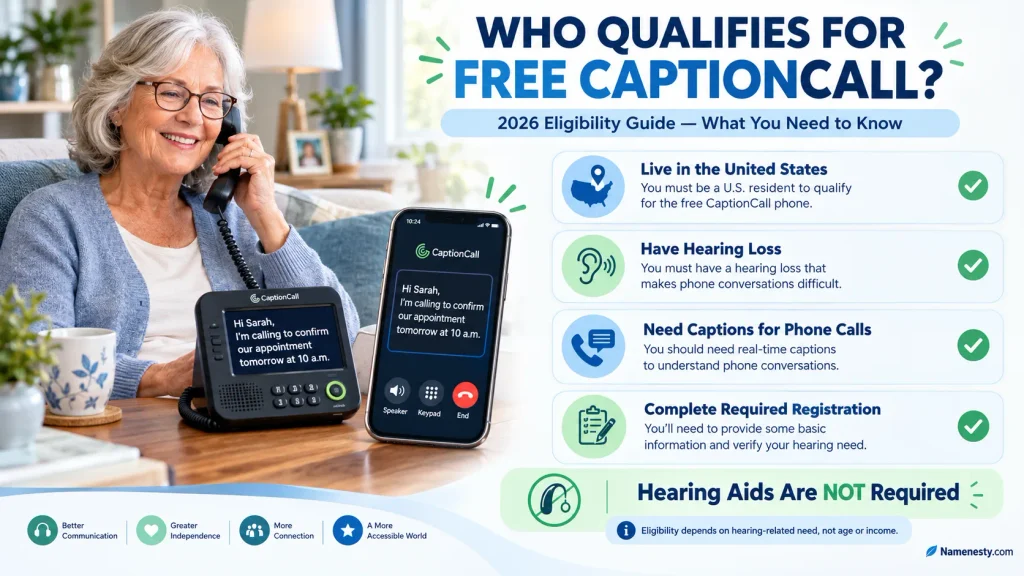
5. Who Qualifies for a Free CaptionCall Phone?
CaptionCall eligibility is based on hearing-related communication needs rather than income, employment status, or social circumstances.
The central requirement is that the applicant has hearing loss that makes captions necessary to use the telephone effectively.
Sorenson’s eligibility guidance, updated in September 2026, explains that its no-cost captioning service is intended for people with hearing loss who need captions during telephone calls.
sorenson.com
Basic eligibility checklist
Check whether CaptionCall may be suitable for you.
I live in the United States.
I have hearing loss.
My hearing loss makes captions necessary for effective telephone conversations.
I can complete the required registration and truthful self-certification.
This is a self-assessment, not an official eligibility determination. Review the requirements before applying.
Do you need hearing aids?
No. Wearing hearing aids is not itself a requirement.
A person can have hearing loss that makes telephone conversations difficult without using hearing aids or cochlear implants.
Conversely, owning hearing aids does not automatically qualify someone if they do not need telephone captions.
Is there an age limit?
CaptionCall is not exclusively a senior citizen service. Adults of different ages may qualify if they meet the applicable hearing-related requirements.
Families considering the service for a minor should contact the provider about applicable registration requirements.
Is there an income limit?
The federal IP CTS eligibility requirement is not based on having a low income.
A person does not need to demonstrate financial hardship simply to qualify for federally funded captioning.
Who should not register?
Someone who does not have hearing loss requiring captions should not register merely because the telephone is offered at no cost.
Federal rules restrict captioned telephone service to eligible registered users.
6. How to Get a Free CaptionCall Phone: Step-by-Step Guide
Getting started with CaptionCall involves confirming your eligibility, selecting the appropriate service, completing registration, and arranging setup.
- Review the eligibility criteria.
Confirm that hearing loss makes telephone captions necessary for effective communication. - Visit the official CaptionCall website
Start at Sorenson CaptionCall to review the home phone and mobile service. - Choose home or mobile captioning.g
Select a dedicated captioned home phone or the CaptionCall Mobile app according to your needs. - Complete registration
Provide the required identifying information and complete the eligibility self-certification. - Arrange installation or app setup
Follow the provider’s instructions for equipment delivery, installation, or mobile activation. - Test the captioning service.ice
Make a routine call to confirm that audio, captions, and connectivity work correctly.
What information is required?
FCC rurequireired IP CTS registration information such as the user’s name, address, telephone number, date of birth, identifying information, and eligibility certification.
Applicants should follow the provider’s current registration instructions rather than sending personal information through unofficial websites.
FCC Docs
+1
Can a family member help someone register?
A family member or caregiver may help an eligible person understand the registration process and navigate the website.
However, the actual user must satisfy the eligibility requirements, and the required certification must accurately represent their own hearing-related need.
How long does installation take?
The timeline depends on registration processing, equipment availability, scheduling, and the chosen setup.
Do not assume same-day delivery or installation. Ask the provider for the expected timeline in your area.
7. Is CaptionCall Legitimate, Safe, and Government-Funded?
Yes. CaptionCall is a legitimate accessibility service associated with Sorenson Communications and the federally regulated IP CTS program.
It is not simply a promotional giveaway or an ordinary consumer app claiming to provide a free telephone.
Why is CaptionCall legitimate?
There are several reasons users can distinguish CaptionCall from suspicious free-phone offers.
First, it operates within an established federal accessibility program.
Second, the FCC maintains rules for eligible providers, user registration, and compensation.
Third, Sorenson publishes service information, legal terms, and customer support resources.
The FCC’s regulations address provider certification and user eligibility, providing a regulatory framework beyond the company’s marketing claims.
FCC Docs
Is CaptionCall safe to use?
CaptionCall is designed for accessible telephone communication, but users should still understand how captioning technology works.
Depending on the call and service configuration, captions may be generated using automated speech recognition, communications assistants, or a combination of technologies.
Because telephone conversations may involve sensitive information, review the provider’s current privacy policy and service terms.
How to avoid CaptionCall-related scams
Use Sorenson’s official website and verified contact channels.
Be cautious if someone asks you to pay a special registration fee, purchase gift cards, or share sensitive information through an unsolicited message.
Also avoid anyone offering to falsify your eligibility or register an unqualified person.
Practical tip: When uncertain about a request for personal information, independently contact CaptionCall through its published support details rather than using a number supplied by an unexpected caller.
8. Does CaptionCall Require Internet or a Landline?
CaptionCall’s connection requirements depend on the device, calling service, and installation configuration.
The important distinction is between the connection used for the voice conversation and the connection used to deliver captions.
How does CaptionCall work with the internet?
Internet Protocol Captioned Telephone Service uses an internet-based connection to deliver caption text.
A home CaptionCall phone may use an internet connection alongside an existing telephone service, depending on the equipment and setup.
A traditional landline can support the voice portion of a call in certain configurations, but that does not automatically eliminate the need for internet connectivity to receive IP captions.
Can CaptionCall work without Wi-Fi?
Possibly. Wi-Fi is not the only form of internet connectivity.
A compatible wired Ethernet connection or a supported mobile data connection may provide internet access, depending on the device.
The provider should confirm which connections are supported for your particular equipment.
Connection comparison
| Connection type | Home CaptionCall | CaptionCall Mobile |
| Home Wi-Fi | May be supported | May be supported |
| Wired Ethernet | May be supported | Not typically a direct smartphone connection |
| Cellular data | Depends on equipment | Supported where compatible |
| Traditional landline | May support voice calling | Not required for the app |
| No usable internet connection | IP captions generally unavailable | IP captions generally unavailable |
What happens if the internet stops working?
If the internet connection fails, caption delivery may stop even when the underlying telephone service can still carry a voice call.
The exact behavior depends on the phone’s configuration.
For this reason, users should understand their emergency-calling options and keep an alternative communication method available.
Sorenson confirms that CaptionCall can support 911 calling but also provides separate emergency-calling guidance for its services.sorenson.com
+1
Best practice: Ask CaptionCall to explain what happens during power failures, internet outages, and emergency calls before relying on a new setup.
9. Is CaptionCall Mobile Free for iPhone and Android Users?
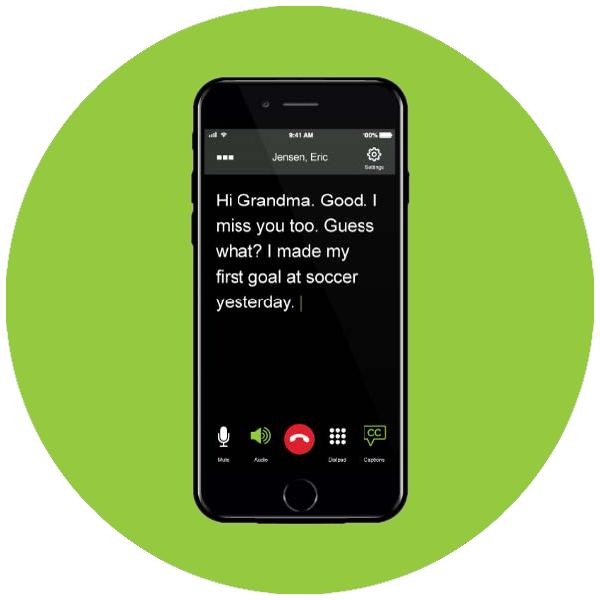
Yes. CaptionCall Mobile is available at no cost to eligible registered users who need telephone captions because of hearing loss.
It offers an alternative to a dedicated home captioned telephone by allowing qualified users to read captions during supported calls on their smartphones.
Captions App for iPhone or Android
CaptionCall Mobile
Designed for eligible people who want captioned conversations while away from home, including during appointments, travel, or everyday activities.
Available for compatible iPhone and Android devices. Registration and eligibility requirements apply.
CaptionCall home phone vs. mobile app
| Feature | Home phone | Mobile app |
| Device | Dedicated captioned telephone | Compatible smartphone |
| Main advantage | Larger dedicated calling interface | Portability |
| Ideal location | Home or fixed location | Home or away |
| Captioning | Yes | Yes |
| Registration | Required | Required |
| Captioning fee | $0 for eligible users | $0 for eligible users |
| Outside connection costs | Possible | Possible |
| Best audience | Users preferring a home telephone | Smartphone users |
Which option should you choose?
Choose the home phone if you prefer a dedicated device, a larger caption display, and guided setup.
Choose CaptionCall Mobile if you already use a smartphone comfortably and want access to captions while moving between locations.
Some users may benefit from having both options available, subject to provider terms.
Does CaptionCall Mobile use data?
Internet-based captioning requires connectivity. Depending on the network and device configuration, mobile data usage may count toward your cellular plan.
The app’s captioning service can be free even when your mobile carrier charges for connectivity.
10. Does Medicare or Insurance Pay for CaptionCall?
CaptionCall’s federally funded captioning service does not depend on Medicare paying for it.
The funding mechanism is the FCC-administered Telecommunications Relay Services program, not the Medicare health insurance program.
Is CaptionCall covered by Medicare?
Eligible users do not need Medicare coverage to receive CaptionCall’s no-cost IP CTS service.
This distinction matters because many people associate hearing-related equipment with medical insurance benefits.
CaptionCall is primarily a telecommunications accessibility service rather than a conventional medical device purchased through an insurance claim.
Do you need Medicaid?
Medicaid enrollment is not a standard federal requirement for IP CTS eligibility.
The service is based on qualifying hearing loss and telephone-captioning needs, not participation in a public health insurance program.
Do private insurers cover CaptionCall?
Private health insurance is generally not needed to pay for the federally funded captioning service.
Other hearing-related equipment, medical evaluations, or treatment may be subject to separate insurance arrangements.
Is CaptionCall a government benefit?
CaptionCall is provided through a federally supported accessibility program. It is not the same as a direct cash benefit or an income-tested assistance payment.
This explains why people who do not receive Medicare, Medicaid, or disability benefits may still qualify.
Key takeaway: Do not delay researching CaptionCall simply because you lack a particular insurance plan. The relevant question is whether your hearing loss makes telephone captions necessary.
11. Can Seniors Get a Free CaptionCall Phone Without Hearing Aids?
Yes. Older adults may qualify for CaptionCall even if they do not wear hearing aids, provided their hearing loss makes captions necessary for effective telephone communication.
Age alone, however, does not establish eligibility.
Why captioned phones can help older adults
Hearing difficulties can make ordinary telephone calls frustrating.
People may miss names, appointment times, medication instructions, or important details because they cannot clearly distinguish the caller’s words.
Captioned telephones provide an additional visual source of information.
For example, an older adult scheduling a medical appointment can listen to the receptionist and read the spoken appointment details.
This may reduce the need to ask for repeated explanations.
Benefits for seniors and caregivers
Clearer conversations
Reading speech alongside audio can help users follow calls more confidently.
Easier appointment scheduling
Captions can help users confirm names, dates, and instructions.
Better family communication
Users may find it easier to participate in longer telephone conversations.
Greater independence
Accessible calls can make routine personal tasks easier to manage.
Can family members use the same phone?
A household member may be able to use the physical device for ordinary calling where the setup permits it.
However, federal rules prohibit unregistered, ineligible people from using IP captioned telephone service with captions activated.
Sorenson explicitly states this restriction in its service disclosures.
Language Services and ASL Interpreting
What should caregivers consider?
Caregivers should evaluate screen readability, hearing comfort, ease of answering calls, internet reliability, and whether the intended user can operate the phone independently.
It is also useful to practice a few calls after installation and confirm that the user understands how to turn captions on and off.
12. CaptionCall vs. ClearCaptions: Which Free Service Is Better?
CaptionCall and ClearCaptions are two services associated with accessible telephone communication for people with hearing loss.
Both are worth considering if you are researching no-cost captioned telephone options, but the best choice depends on your equipment preferences, connectivity, and support needs.
General comparison
| Comparison factor | CaptionCall | ClearCaptions |
| Main purpose | Captioned telephone communication | Captioned telephone communication |
| Intended audience | Eligible people with hearing loss | Eligible people with hearing loss |
| Federal IP CTS framework | Yes | Yes |
| Captioning fees | No cost for eligible users | No cost for eligible users |
| Registration | Required | Required |
| Home phone options | Available | Available |
| Installation assistance | Offered | Check current options |
| Mobile features | CaptionCall Mobile | Verify current availability and compatibility |
| Internet needs | Depends on setup | Depend on setup |
Features and service offerings may change, so users should verify current details with each provider rather than relying only on a comparison table.
When CaptionCall may be the better choice
CaptionCall may suit someone who wants a dedicated home telephone, professional setup assistance, and a mobile captioning option within the same provider’s ecosystem.
It may also appeal to people who prefer an established accessibility provider with published support resources.
When ClearCaptions may be worth considering
ClearCaptions may be worth evaluating if its available equipment, installation arrangements, or support approach better match your household needs.
Before choosing, compare current equipment, connectivity requirements, call handling, customer service, and accessibility features.
Five questions to ask both providers
- Which phone model would I receive?
- Will it work with my current internet and telephone service?
- Can I keep using my existing phone number?
- What happens if the internet or electricity fails?
- What assistance is available if captions stop working?
Which is better? Neither service is automatically the best for every user. The better option is the one that meets your hearing-related needs, works reliably with your connection, and is easiest for you to operate.
13. What Are the Pros, Cons, and Limitations of CaptionCall?
CaptionCall provides meaningful accessibility benefits, but users should understand its practical limitations before deciding whether to register.
Advantages of CaptionCall
- No CaptionCall captioning subscription fees for eligible users.
- Dedicated captioned telephone equipment may be provided at no cost.
- Users can read speech while listening to conversations.
- Mobile captioning is available for compatible smartphones.
- Setup and support assistance are available.
- The service operates under a federal accessibility framework.
- Users may find important telephone conversations easier to follow.
Potential disadvantages
- Eligibility is restricted to people who genuinely need captions because of hearing loss.
- Internet or other communication connectivity may be required.
- Captions may not appear at the same moment as the spoken words.
- Speech recognition or captioning errors can occur.
- The equipment is provided under Sorenson’s ownership and service terms.
- The service is intended for use in the United States.
- Some users may prefer a different telephone interface or provider.
How accurate are CaptionCall captions?
Captioning quality can vary with the speaker’s clarity, background noise, overlapping speech, unfamiliar names, and technical conditions.
For important information such as medical instructions, financial details, or addresses, users should confirm what they read rather than assume every caption is perfectly accurate.
Are captioning delays normal?
A short delay can occur because the spoken audio must be processed before captions appear.
The experience may differ between calls and captioning methods.
Users should avoid treating captions as an exact, instantaneous transcript of everything spoken.
Does CaptionCall work during a power outage?
That depends on the equipment and connection.
If the device, router, or underlying phone service loses power, calling or captioning functionality may be affected.
For emergency preparedness, keep an alternative calling method available and review Sorenson’s emergency-service instructions.
14. Is CaptionCall Worth It? Who Should Use This Free Service?
For someone whose hearing loss makes ordinary phone calls difficult to understand, CaptionCall may be a valuable accessibility option.
The financial appeal is clear: eligible users can receive federally funded captioning without a separate captioning subscription.
However, the real benefit is the potential improvement in everyday communication.
CaptionCall decision framework
Find your best CaptionCall setup
Use this quick guide to identify which option may fit your circumstances. It does not determine federal eligibility.
Where do you most often need captioned calls?
Mostly at home
While away from home
Both at home and on the go
What connection do you currently have?
Reliable home internet
Smartphone with cellular data
Limited or unreliable internet
Suggested next step
A dedicated CaptionCall home phone may be the best starting point. Confirm compatibility with your current connection. Explore official CaptionCall options
R.eal-world situations where CaptionCall may help
Medical appointments: A patient can listen and read while a receptionist explains available appointments or instructions.
Family conversations: Someone with hearing loss may find it easier to understand relatives speaking over the phone.
Business calls: A person handling customer inquiries or administrative tasks may benefit from having spoken details displayed as text.
Everyday errands: Captioned calls may help when contacting delivery services, utility companies, or appointment providers.
Travel and mobility: An eligible smartphone user may prefer mobile captioning when away from home.
When CaptionCall may not be the right choice
CaptionCall may not be appropriate if you do not meet the hearing-loss eligibility requirement, need transcription for purposes unrelated to qualifying telephone calls, or primarily want captions for videos rather than telephone conversations.
For videos, livestreams, and social media content, ordinary closed captioning or subtitle tools are more relevant.
15. People Also Ask
CaptionCall’s phone captioning service is provided at no cost to eligible registered users. However, users may still pay for separate internet, cellular, or telephone services.:
No. Eligible users do not pay a monthly CaptionCall captioning subscription fee.
The main conditions are eligibility, registration, proper use, and compliance with service terms. The equipment is provided under Sorenson’s ownership arrangements, and separate connection expenses may appQ4:4
No. CaptionCall is intended for registered individuals whose hearing loss makes telephone captions necessary.
The federal IP CTS registration process includes a user eligibility self-certification. A doctor’s prescription is not generally the central federal requirement for this process. Applicants should follow current provider instructions.
Yes, if your hearing loss makes captions necessary for effective telephone use. Hearing aids do not automatically qualify or disqualify you.
Yes, qualifying older adults can use CaptionCall at no cost. Age alone is not the qualification.
Key Takeaways: Is CaptionCall Really Free?
CaptionCall is a legitimate, federally funded telephone accessibility service. Its no-cost offering can make a meaningful difference for people who need captions to understand telephone conversations.
The most important points are straightforward:
- CaptionCall is free for eligible U.S. users. The captioning service does not require a monthly subscription.
- Eligibility is based on hearing-related need. Users must genuinely require captions to communicate effectively by telephone.
- The FCC-administered TRS Fund supports the service. Qualified users do not pay the captioning provider for each minute of captions.
- Outside expenses may still apply. Internet, cellular, or telephone service costs are separate.
- Home and mobile options are available. Choose based on your communication needs, equipment preferences, and connectivity.
- Registration is required. Users must provide accurate information and complete the necessary certification.
For qualified users, CaptionCall can be worth considering because it combines accessibility technology, no-cost captioning, and provider support.
Before registering, confirm your eligibility, review the equipment terms, and make sure the service will work with your existing telephone or internet connection.
You can find current eligibility and registration details on the official CaptionCall website.











3 thoughts on “Is CaptionCall Really Free? 5 Facts You Must Know”