What Does “Devil’s Tango” Mean? Origin, Slang Use & Why It Went Viral
Ever spotted the phrase “devil’s tango” in a meme, TikTok video, or YouTube comment and wondered what it really means? You’re not alone. This unusual expression sounds like the name of a mysterious dance, but its common internet meaning is much more suggestive. Devil’s tango is a humorous euphemism for sex, often used to keep conversations playful rather than explicit. But how did the phrase become popular, and why do online creators use it so often? In this guide, discover its meaning, cultural context, everyday examples, and related slang so you can understand the joke whenever it appears.
Have you ever seen someone mention the “devil’s tango” in a meme or online conversation and wondered what they were talking about? The expression sounds like a mysterious dance, but its common internet meaning is quite different.
The devil’s tango is a humorous euphemism for sex, usually sexual intercourse. People use it to refer to intimacy indirectly, often to make a joke, keep a conversation playful, or avoid more explicit wording.
The phrase has become recognizable through online humor and YouTube commentary, and it appears in memes, short-form videos, and everyday internet conversations. Understanding its meaning, tone, and context helps you recognize when someone is joking and when a more literal interpretation may apply.
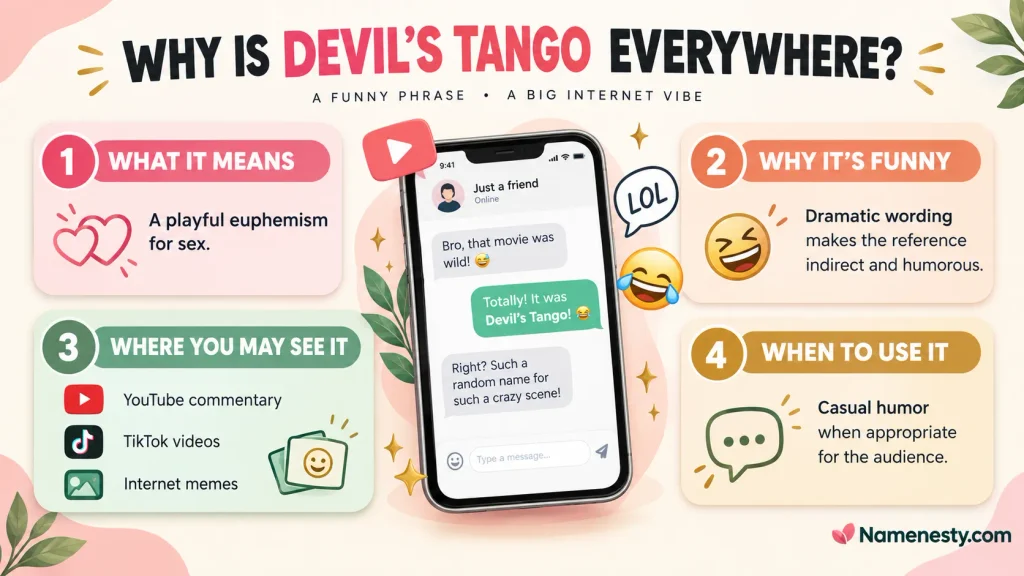
1. What Does Devil’s Tango Mean in Slang?
In modern internet slang, “devil’s tango” usually means sex. It is a playful expression that replaces a direct word with an exaggerated image of two people performing a dramatic dance.
For example:
“The movie faded to black just as the couple started doing the devil’s tango.”
Here, the phrase indirectly refers to sexual activity. It is not describing a literal dance or naming a specific sexual position.
The wording creates humor by combining the devil, often associated with temptation or mischief, with the tango, a dance performed by partners. That contrast makes the expression sound theatrical and intentionally over-the-top.
In simple terms: If someone says two people are “doing the devil’s tango,” they usually mean the people are having sex.
2. Where Did the Phrase Devil’s Tango Originate?
The exact first use of “devil’s tango” is difficult to establish reliably. Slang expressions often develop informally, spread through conversations, and appear in different online communities before anyone documents them.
The phrase combines familiar English-language imagery:
- Devil: Suggests temptation, mischief, or something considered forbidden.
- Tango: Suggests two partners moving together in a coordinated dance.
- The combined expression: Creates a humorous, indirect reference to sexual intimacy.
Although these elements help explain why the expression works, they do not prove when or where it was first coined.
The phrase’s modern online recognition is associated with internet humor and YouTube commentary. It is better to distinguish that documented cultural association from an unverified claim about its original inventor.
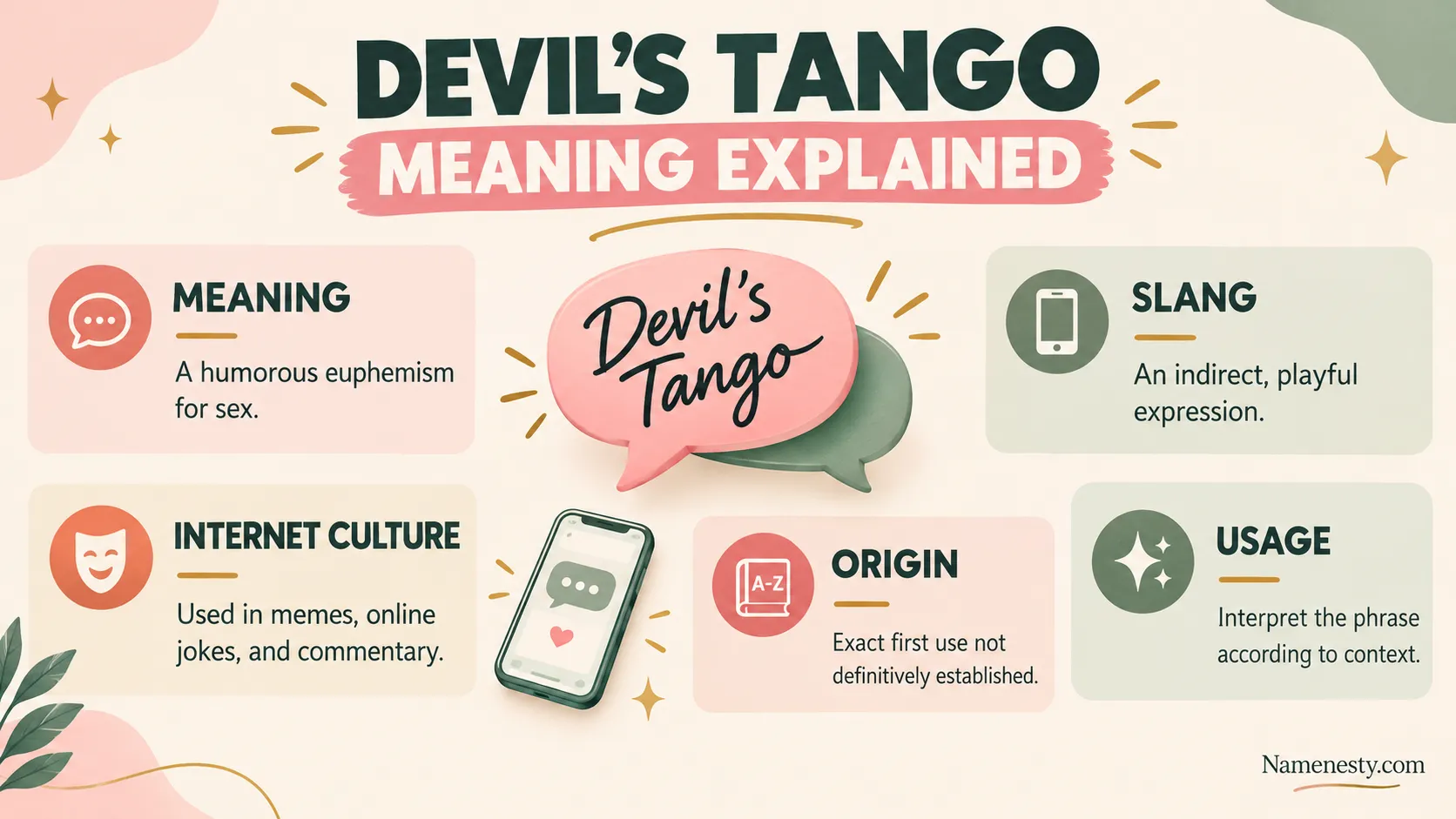
3. Why Is Devil’s Tango Popular on Social Media?
The expression works well online because it communicates a suggestive idea without stating it directly. Its dramatic wording also makes an ordinary reference to intimacy sound absurd, which is useful for comedy.
There are three main reasons people use it:
- Indirectness: It refers to sex without using explicit terminology.
- Humor: The theatrical wording makes the subject sound exaggerated.
- Meme potential: The phrase is short, recognizable, and easy to adapt to reaction videos or jokes.
For instance, someone reacting to an unexpectedly romantic scene might comment, “Oh no, not the devil’s tango!”
The phrase can also help creators keep commentary lighthearted. However, whether it is appropriate for a particular video, audience, or platform depends on the surrounding content and community guidelines.
4. What Does Doing the Devil’s Tango Mean?
“Doing the devil’s tango” is a variation of the expression “the devil’s tango.” Both generally refer to having sex.
Consider these examples:
- “Their parents went out, so the couple joked about doing the devil’s tango.”
- “The sitcom hinted that the characters had done the devil’s tango.”
- “The narrator described the romantic scene without using explicit language.”
Each example uses the phrase as an indirect reference to sexual intimacy.
The expression is usually playful rather than clinical or romantic. It can sound ironic, cheeky, or deliberately old-fashioned, depending on who says it and how they say it.
It is also important not to assume that every mention of dancing with the devil has this meaning. In other contexts, similar wording can refer to taking risks or making questionable choices.
5. Is Devil’s Tango a Real Dance or a Slang Expression?
The tango is a real partner dance with historical roots in the Río de la Plata region, particularly Argentina and Uruguay. The expression “devil’s tango,” however, is not the standard name of an established tango style.
In everyday internet usage, it is primarily a euphemism for sex. The dance imagery is figurative, creating a playful comparison between partners dancing together and romantic or sexual intimacy.
This distinction matters because some websites discuss the phrase as if it were a recognized dance or a formal cultural tradition. Without reliable historical evidence, it is more accurate to describe “devil’s tango” as slang.
Quick comparison:
| Term | Meaning |
| Tango | A recognized partner dance |
| Devil’s tango | A humorous euphemism for sex |
| Dancing with the devil | Taking a dangerous or morally risky course of action |
| Horizontal tango | Another humorous euphemism for sex |
The surrounding sentence usually makes the intended meaning clear.
6. Is Devil’s Tango Another Word for Sex?
Yes. In its most common internet-slang usage, “devil’s tango” is another way of referring to sex, particularly sexual intercourse.
It is an indirect expression rather than a technical term. People may choose it when discussing romantic comedies, television scenes, relationship jokes, or suggestive memes.
For example:
“The show made it obvious that the characters had been doing the devil’s tango, even though nothing explicit was shown.”
The sentence communicates the implication without describing sexual activity.
There is a useful distinction between a euphemism and a synonym in a formal context. Although the expressions may refer to the same activity, “devil’s tango” is informal and humorous. It would generally be unsuitable for medical advice, scientific writing, or a serious conversation about sexual health.
7. How Did Devil’s Tango Become an Internet Meme?
“Devil’s tango” fits internet humor because it transforms a potentially awkward subject into a memorable joke. Its popularity is associated with online commentary, animated reactions, and creators who use playful euphemisms when discussing romantic or sexual scenes.
- Explore More: https://namenesty.com/what-do-carnal-mean/
A useful way to understand its online spread is to consider three stages
1. Euphemistic expression
The phrase works as an indirect, humorous reference to sex rather than a literal dance instruction.
2. Online commentary
YouTube creators and animated commentary helped make the wording recognizable to internet audiences.
3. Meme culture
Viewers reuse recognizable expressions in reactions, captions, comments, and short-form videos.
This is a broad explanation of how slang spreads, not a verified timeline of the phrase’s first appearance. Establishing an exact origin would require dated primary-source evidence.

8. What Is the Connection Between Devil’s Tango and Alex Meyers?
Alex Meyers is a YouTube creator known for animated commentary on films, television shows, and entertainment culture. His use of humorous euphemisms when discussing intimate scenes has contributed to the phrase’s association with YouTube commentary.
That association is relevant to readers who first encountered the expression in animated recaps or discussions of romantic storylines.
However, being associated with popularizing a phrase is not the same as proving that someone invented it. Without a reliable record of its earliest use, it would be misleading to attribute the phrase’s creation exclusively to one person.
If you saw “devil’s tango” in a YouTube video, a reaction clip, or a related comment, the expression most likely refers to sexual intimacy.
9. How Is Devil’s Tango Used on TikTok and YouTube?
The expression can appear in several types of social media content, although its meaning remains dependent on context.
TikTok
Creators may use the phrase in reaction videos, relationship humor, fictional-story discussions, or captions that hint at a romantic scene.
Example: “The plot twist nobody expected: the devil’s tango.”
YouTube
The expression suits animated recaps, comedy commentary, and discussions of romantic or suggestive scenes in movies and television.
Example: “That episode took the romance in a completely unexpected direction.”

Instagram and other platforms
It may appear in comments, humorous Stories, or conversations between people familiar with the expression.
Example: “The camera cut away at exactly the right moment.”
These are illustrative examples, not verified quotations from specific posts. If you plan to use the expression publicly, consider whether your audience understands the joke and whether the content is appropriate for the intended platform.
10. Funny Devil’s Tango Examples in Everyday Conversations
The humor of “devil’s tango” often comes from replacing a direct statement with an unnecessarily dramatic one. It can make a conversation about a fictional couple, a romantic comedy, or a suggestive scene sound deliberately ridiculous.
Here are some original examples showing how the phrase can work in context:
- “The movie faded to black. We all know what happened next.”
- “Those two characters went from flirting to the devil’s tango in record time.”
- “The writers left absolutely nothing to the imagination.”
- “One romantic dinner later, the storyline took a very different turn.”
- “The awkward morning-after scene told us everything.”
- “The narrator really found the most dramatic way to describe intimacy.”
- “That plot twist needed a warning label.”
- “The camera politely decided it had seen enough.”
- “The fictional couple finally stopped pretending they were just friends.”
- “The scene ended, and the internet immediately understood the assignment.”
These examples do not all contain the exact phrase, but each illustrates the same kind of indirect humor. Use the explicit euphemism when clarity matters; use subtler wording when the joke should remain implied.
11. Devil’s Tango Memes and Humorous Internet Expressions
Memes often rely on shared understanding. A phrase becomes funny when readers recognize what it means without needing a long explanation.
“Devil’s tango” is useful in this setting because it sounds dramatic, slightly mischievous, and less direct than the word it replaces.
Here are five original meme concepts for social media creators:

The unexpected scene
Caption: “When the family movie suddenly becomes a romantic drama.”

The detective reaction
Caption: “The clues were subtle. The morning-after scene was not.”

The writer’s plot twist
Caption: “The chapter took a turn I was not prepared to write.”

The knowing look
Caption: “Nobody said anything. Everybody understood.”

The dramatic cutaway
Caption: “And that is where the camera respectfully exits.”
These concepts are suitable for fictional, non-graphic comedy. They work best when the image and caption reinforce the same joke instead of spelling out every detail.
12. What Is the Difference Between Devil’s Tango and Horizontal Tango?
Both expressions are informal euphemisms for sex. Their main difference is wording and tone rather than the activity they describe.
| Feature | Devil’s tango | Horizontal tango |
| Common meaning | Sex | Sex |
| Tone | Playful, dramatic, meme-friendly | Playful, old-fashioned, suggestive |
| Typical context | Internet jokes and entertainment commentary | Humorous conversation and older comedic expressions |
| Literal meaning | Not a standard dance name | Not a standard dance name |
| Best use | Casual, informal humor | Casual, informal humor |
Neither phrase is a technical term. Both may confuse readers who have never encountered them, so a direct explanation is preferable when communicating with a broad audience.
Other related expressions include “making whoopee,” “getting intimate,” and “Netflix and chill.” These expressions do not always mean precisely the same thing: for example, “Netflix and chill” can imply a sexual invitation, but its meaning depends on context.
13. Is Devil’s Tango Appropriate to Use in Public?
Generally, “devil’s tango” is a mild, humorous euphemism, but it still refers to sexual activity. Whether it is appropriate depends on your audience, setting, and purpose.
| Situation | Recommendation |
| Private jokes with friends | Usually fine if everyone is comfortable |
| Comedy videos and memes | Suitable when the context and audience allow it |
| Public social media captions | Consider the audience and platform rules |
| Workplace communication | Usually choose more professional wording |
| Medical or educational discussions | Use clear, accurate terminology |
| Conversations involving consent or abuse | Avoid humor that could trivialize harm |
The expression is not inherently offensive, but sexual references can make some people uncomfortable. It is also not a substitute for clear language when discussing consent, sexual health, or personal boundaries.
- Explore More: https://namenesty.com/definition-of-seduce
A helpful rule: Use the phrase for lighthearted humor when the context is appropriate, but choose direct language when accuracy, sensitivity, or professionalism matters more.
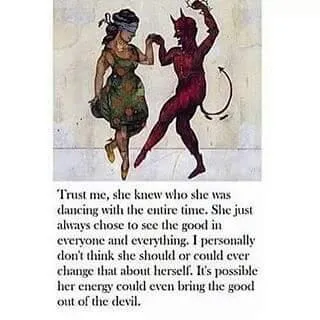
14. What Are Some Similar Slang Expressions to Devil’s Tango?
If you understand “devil’s tango,” these related expressions may help you interpret other internet jokes and conversations.
| Expression | Common meaning | Tone |
| Horizontal tango | Sex | Playful, old-fashioned |
| Making whoopee | Having sex | Retro, humorous |
| Getting intimate | Becoming physically or emotionally close | Relatively neutral |
| Netflix and chill | Watching Netflix, sometimes implying sexual interest | Casual, context-dependent |
| Hooking up | A casual romantic or sexual encounter; meaning varies | Informal |
| Dancing with the devil | Taking a dangerous or morally questionable risk | Figurative |
| Birds and the bees | A euphemistic way to discuss reproduction and sex | Gentle, often used with children |
| Getting lucky | Often having a successful romantic or sexual encounter | Casual, suggestive |
Not every expression is interchangeable with “devil’s tango.” Some refer to a broader range of romantic situations, while others describe risk or reproduction rather than sexual activity itself.
When learning slang, pay attention to the sentence, the relationship between speakers, and the platform where the expression appears. Context often reveals more than the phrase alone.
15. People Also Ask about Devil’s Tango Meaning
“Devil’s tango” is a humorous euphemism for sex, usually sexual intercourse. People use it to make an indirect or funny reference to intimacy.
It generally means having sex. The wording is figurative and playful, not a reference to performing an actual dance.
It is suggestive because it refers to sexual activity, but it is generally used as a mild euphemism rather than an explicit description. Appropriateness depends on the audience and situation.
The phrase’s exact origin has not been reliably established. Alex Meyers is associated with its popularity in online commentary, but that does not establish that he invented it.
It can appear in TikTok memes, captions, and reaction videos. However, the expression is not exclusive to TikTok; its broader internet use is also associated with YouTube commentary and online humor.
No. In common slang, it refers to sex generally rather than a particular position.
Conclusion: Understanding the Meaning of Devil’s Tango
The Devil’s tango is a playful euphemism for sex, commonly used in internet humor, entertainment commentary, and memes. It is not the name of an official dance style or a specific sexual position.
Its appeal comes from its dramatic wording, indirect meaning, and suitability for humorous online conversations. Although the expression is associated with YouTube commentary and has circulated through social media culture, its exact first use remains uncertain.
When you encounter the phrase, interpret it in context. When using it yourself, consider your audience and choose wording that suits the purpose of your content.
Key takeaways:
- The primary slang meaning is sex.
- The expression is informal, suggestive, and often humorous.
- It is associated with online commentary and meme culture.
- Its precise origin has not been definitively established.
- Clear, context-appropriate language is preferable in serious discussions.
Bookmark this guide if you enjoy learning the meanings behind internet slang, and explore related terminology articles on Namenesty for more explanations of modern online language.